
Know more about Chin2 Bhosle, grandson of the legendary Asha Bhosle, who defied a conventional career to pursue his passion for music.

'SIT means nothing because the BJP government of Uttar Pradesh and Ram Janmabhoomi Trust are the same people.'

'We can never trust the BJP when it comes to elections.'

'Now if you break the party under the 10th Schedule you have to join another party.' 'You cannot join the NDA as it is not a party. You can only join another party, and that is the BJP.' 'So the question to ask is that these so-called 20 TMC Lok Sabha MPs who are parting ways with the TMC, are they ready to join the BJP and accept Narendra Modi as their leader?'

'Mamata was more feared than loved, and in politics when people start fearing you then they start hating you.' 'So Mamata's comeback now is impossible.'

'The software vendor had a black mark against him and yet they went ahead with him. Why was this company shortlisted? Who is responsible for signing off this software?'

'If we had not passed an order against Ranveer Singh, the film industry would have collapsed.'

'I have never chased money. Yes, you have to pay me my worth. I am not a free artiste but I don't chase money.'

'When we start describing somebody as an enemy that is the start of politics and emotion after which no business can take place.' 'We need to get out of this, allow Indian businessmen to do business with China.'
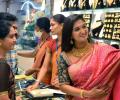
'Even last year, when India bought gold, the physical quantity was much less than the previous years.'
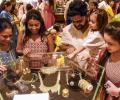
'What exactly is on the prime minister's mind, we do not know. But it feels like the government wants the country to be prepared for unseen challenges ahead.'

'If the Opposition associates itself too much with the minorities, then it becomes easy for the BJP to get Hindu consolidation votes.'

What lessons opposition parties need to learn post defeat of Mamata Banerjee in West Bengal elections? The election saw spectacular victor of BJP which rose from 3 seats in 2016 to 206 seats in 2026 assembly elections.

'Tamil Nadu has 42% of its population in the 18 to 39 age group. The bulk of the population in this age group voted for Vijay and women voters too voted for him in big numbers.'

'The nepotism, corruption, bad governance and 15 years of rampant crime that has happened across West Bengal under her rule led to her ouster.'

'The entire party is centred around one man and that is Arvind Kejriwal.' 'Till the time you are in Kejriwal's good books you are powerful. The day you are not with him, you are no one in the party.'

Karex, the Malaysian company that makes roughly one in five of the world's condoms -- about five billion a year, supplying Durex and Trojan among others -- announced this week that it is raising prices by up to 30 percent. The reason is the Strait of Hormuz.

Prem Panicker's Must Read Blog On The Gulf War.

...reopen for up to six months. Until then, the Strait stays nearly closed. The world pays. And no one, including the man who started this, can say when it ends, notes Prem Panicker in his must read blog on the Iran War.

...is a way out, notes Prem Panicker in his must read blog on the Iran War. What the indefinite extension produces is a prolonged condition of not-war-not-peace, in which oil markets cannot stabilise, Asian refineries cannot plan, European governments cannot stop subsidising consumption they cannot afford, and the next flashpoint -- a seized tanker, a miscalculated drone strike, a Truth Social post that claims too much -- is one news cycle away.
